
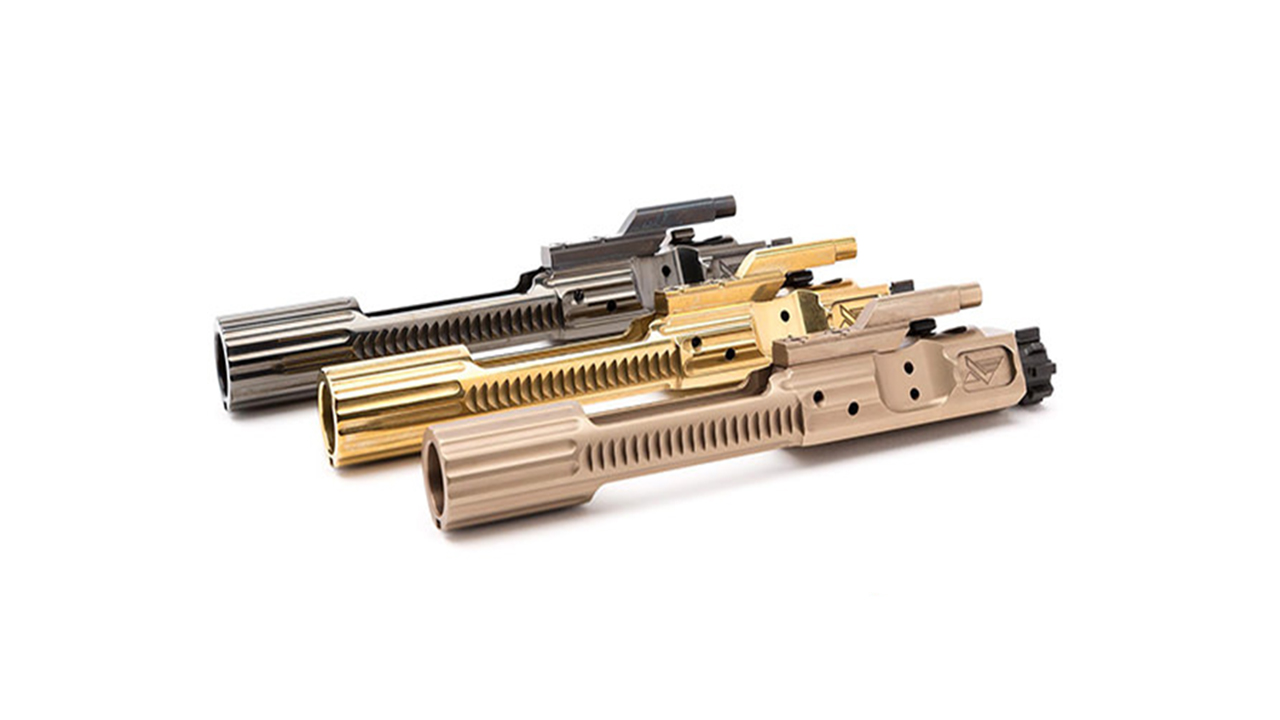

PVD (Physical Vapor Deposition) coating is an advanced surface engineering technology that offers transformative benefits for firearm components. Its application on critical shotgun and pistol accessories—such as slides, barrels, triggers, bolts, receivers, sights, and magazine components—significantly enhances performance, durability, and aesthetics. PVD coaters are used for gun accessories. The common color is golden, black. The easy way to obtain golden color is use arc ion plating to make titanium nitride coatings. Black is a kind of oxidation color in PVD color. All the accessories put into the PVD chamber must be after pretreatment. PVD machines for this application can be small scale or middle size.
1. Unmatched Durability and Wear Resistance
-
Extends Component Life: PVD coatings like Titanium Nitride (TiN), Chromium Nitride (CrN), and Diamond-Like Carbon (DLC) are exceptionally hard. They form a protective shield that drastically reduces wear from repeated friction, cycling, and mechanical impact. This is crucial for high-contact areas like slide rails, bolt faces, and sear surfaces.
-
Abrasion Resistance: The coating protects against scratching and abrasion from holsters, cleaning tools, and field use, maintaining both function and appearance over thousands of cycles.
2. Superior Corrosion and Chemical Resistance
-
Rust Prevention: PVD creates a dense, non-porous barrier that shields steel and other metals from moisture, sweat, fingerprints, harsh cleaning solvents, and corrosive atmospheres. This is vital for maintaining reliability and preventing pitting in all weather conditions.
-
Long-Term Protection: It offers superior corrosion resistance compared to many traditional blueing or parkerizing methods, ensuring the firearm's integrity and safety over its lifetime.
3. Enhanced Lubricity and Friction Reduction
-
Smoother Operation: Coatings like DLC have an intrinsically low coefficient of friction. This results in smoother slide action, reduced trigger pull grit, and improved overall cycling, which can enhance both the user experience and mechanical reliability.
-
Reduced Need for Lubricants: The "slippery" surface allows for more consistent operation with less reliance on external oils or greases, which can attract dirt and debris. This is particularly beneficial for tactical or duty firearms.
4. Improved Aesthetics and Customization
-
Diverse, Resilient Finishes: PVD offers durable, functional colors beyond basic black, including matte/satin black, tungsten gray, coyote brown, OD green, and even subtle bronzes or golds (e.g., TiN). These colors are embedded in the coating and won't fade or rub off like paint or cerakote.
-
Premium, Tactical Look: It provides a uniform, high-tech finish that is highly sought after for custom builds and premium accessories, enhancing both visual appeal and perceived value.
5. Exceptional Adhesion and Material Versatility
-
Strong Bond: The PVD process creates a strong metallurgical bond at the atomic level, meaning it won't chip, peel, or flake under the stresses of recoil and operation—a common issue with some traditional platings or paints.
-
Wide Substrate Compatibility: It can be applied to various materials used in firearms, including stainless steel, alloy steels, aluminum, and titanium, without risk of hydrogen embrittlement (a concern with some electrochemical processes).
6. Environmental and Practical Benefits
-
Eco-Friendly Process: PVD is a dry, vacuum-based process that does not involve hazardous wet chemicals or produce toxic waste, making it a cleaner alternative to many traditional finishing methods.
-
Dimensional Precision: The coating is applied at the micron level (typically 1-5 microns), meaning it does not alter critical tolerances, interfere with headspacing, or affect the fit of tightly machined parts.