
Advanced PIII&D Equipment | Integrated Ion Implantation & Thin-Film Coating System
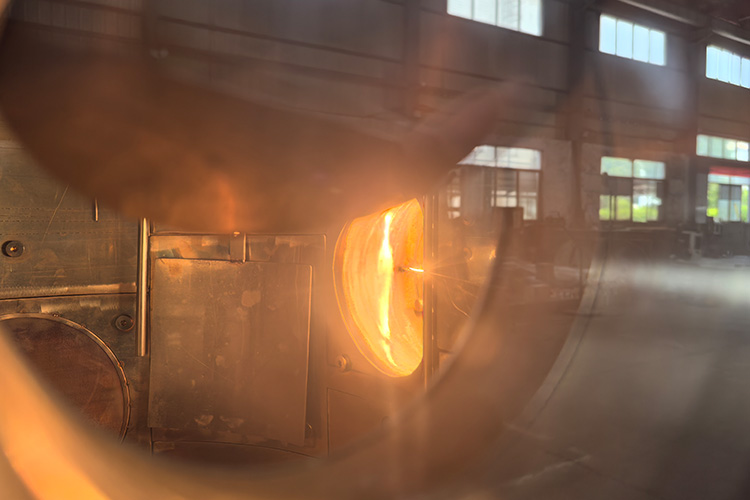
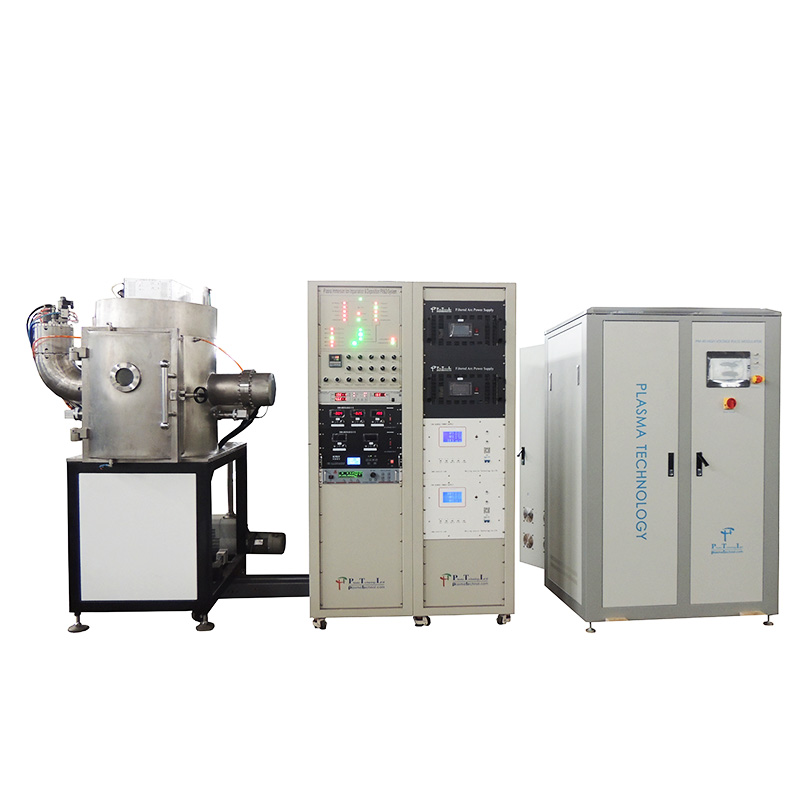
Vacuum deposition plasma immersion ion implantation equipment is an advanced multi-functional platform integrating plasma immersion ion implantation and physical vapor deposition technology. It is specially designed for material surface engineering, semiconductor modification, precision optical coating, tool coating and cutting-edge scientific research. It can complete ion implantation and thin film deposition processes successively or simultaneously in the same vacuum chamber without exposure to the atmosphere, achieving excellent performance. Interface bonding and surface characteristics. This equipment is ideal for improving wear resistance, corrosion resistance, biocompatibility, electrical and optical properties of products.
Explore our high-performance Vacuum Deposition Plasma Immersion Ion Implanter. This integrated PIII&D system combines ion implantation & thin-film deposition for superior surface engineering, tool coating, & semiconductor applications.
Advanced Vacuum Deposition Plasma Immersion Ion Implanter (PIII&D): A Unified Surface Engineering Platform
Our state-of-the-art Vacuum Deposition Plasma Immersion Ion Implanter, commonly termed a PIII&D (Plasma Immersion Ion Implantation & Deposition) System, represents a breakthrough in integrated surface modification technology. It seamlessly merges two powerful processes—Plasma Immersion Ion Implantation (PIII or PI³) and Physical Vapor Deposition (PVD)—within a single, uninterrupted vacuum environment. This multifunctional platform is engineered to enhance the surface properties of materials, achieving unmatched adhesion, wear resistance, corrosion protection, and functional performance for industrial tools, precision components, semiconductor devices, and biomedical implants.
Technology & Operational Principles
The system's versatility stems from its ability to perform sequential or hybrid processes without breaking vacuum:
-
Plasma Immersion Ion Implantation (PIII):
-
The substrate is immersed in a uniform, high-density plasma generated from a process gas (e.g., N₂, O₂, C₂H₂, Ar).
-
High-voltage pulses (typically -1 to -100 kV) are applied to the substrate holder.
-
Ions from the plasma are accelerated across the sheath and implanted into the substrate surface, creating a graded, diffusion-less layer with improved hardness, fatigue life, and chemical resistance.
-
-
Physical Vapor Deposition (PVD) Coating:
-
Utilizing magnetron sputtering, arc evaporation, or electron beam evaporation sources.
-
Target material (e.g., Ti, Cr, Al, DLC, TiAlN) is atomized and deposited onto the substrate surface.
-
The process can be run independently or in synchronization with PIII to create dense, well-adhered functional films.
-
-
Hybrid PIII&D Process:
-
The key advantage. Ion implantation can be used prior to deposition to create a "graded interface," dramatically improving film adhesion.
-
Alternatively, simultaneous implantation during deposition (ion-assisted deposition) results in denser, smoother, and harder coatings with optimized stress states.
-
Features & System Advantages
-
Unmatched Adhesion: The graded interface created by pre-implantation eliminates the sharp property discontinuity between coating and substrate, preventing delamination.
-
Superior Coating Quality: Ion-assisted deposition leads to denser, pore-free films with enhanced mechanical and optical properties.
-
Excellent Conformality: Plasma immersion ensures uniform treatment of complex geometries, including 3D parts, internal surfaces, and trenches, overcoming the line-of-sight limitations of conventional beamline implanters.
-
High-Efficiency & Scalability: Batch processing of multiple components increases throughput. The system architecture is scalable for both R&D and industrial production.
-
Process Flexibility & Control: Independent control over implantation and deposition parameters allows tailoring of surface properties for specific applications.
-
All-in-One Vacuum Solution: Conduct multiple process steps (cleaning, implantation, deposition) in one pump-down cycle, saving time and preventing contamination.
Applications
-
Tool & Die Coating: Enhance the lifetime and performance of cutting tools, molds, and forming dies with ultra-hard, low-friction coatings like TiAlN, CrN, and DLC.
-
Aerospace & Automotive: Improve wear and corrosion resistance for critical engine components, landing gear, and transmission parts.
-
Semiconductor & Microelectronics: Modify surface conductivity, create buried layers, and improve dielectric properties for advanced devices.
-
Medical & Biomedical: Optimize the biocompatibility, wear resistance, and antibacterial properties of orthopedic implants (knees, hips) and surgical instruments.
-
Precision Optics: Deposit durable, high-performance optical coatings with controlled refractive index and low stress.
-
Research & Development: Ideal for investigating new material combinations, interface science, and advanced functional films.
Why Choose Our PIII&D System?
Our Vacuum Deposition Plasma Immersion Ion Implantation Equipment is built with precision, reliability, and process repeatability at its core. We offer comprehensive support from system design and installation to process development and training. By integrating ion implantation and thin-film deposition, we provide a future-proof solution that drives innovation in surface engineering, helping our customers develop products with superior performance and longevity.
Contact us today to discuss how our integrated PIII&D technology can solve your most challenging surface engineering requirements.